
My Australian Story: Isabella Choate
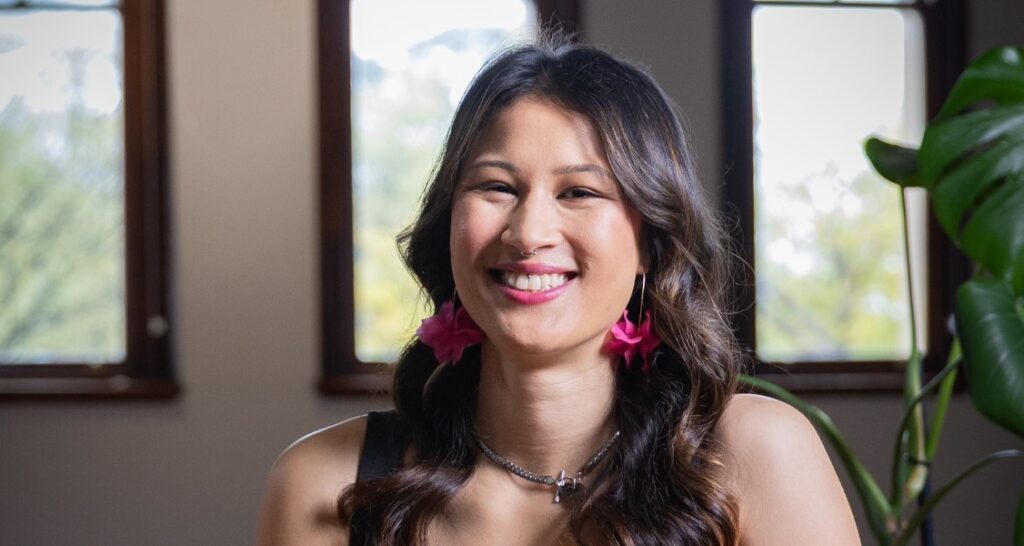
Isabella Choate is a living experience advocate who fights for many causes that seek to make Australia a more just and inclusive society. A 2025 Ambassador for International Day of People with Disability (IDPwD), Isabella shares their Australian story with Auspire, one year after being recognised in the 2025 Australian of the Year Awards as a WA Young Australian of the Year finalist. Here, they share what it was like growing up in Australia as a second generation Australian, and how they’re using their experiences of hardship and strife to advocate for access and inclusion for others.
The Australian of the Year Awards acknowledge that we can all play our part in the story of Australia – so, how did your Australian story begin?
My family’s Australian story began when my Goong Goong (Grandfather) and Pau Pau (Grandmother) left the political turmoil of China’s Great Leap Forward for a better life in Australia – seeking safety, stability and the chance for a new beginning. I’m grateful for the many privileges and opportunities this country has offered us: access to quality education, social resources, and the freedom for my family to pursue life on our own terms. In contrast to this, my experiences of marginalisation have shown me another Australia. I recall being five years old and being teased by others for my brown skin; I vividly remember praying for white skin, blue eyes and blonde hair.
After my father passed when I was six, my siblings and I grew up below the poverty line with my mother working extremely hard to put food on the table. I remember my Mum being drawn to tears and frustration trying to access Centrelink and the financial pressure of rent and bills being felt by the whole family. To pursue opportunities in sport – a quintessential Australian value, my community, family and friends supported me to make these dreams a reality, through scholarships, sponsorships, and helping pay school bills. When I became disabled and had to take early retirement from my sport, this enthusiasm disappeared and I quickly lost friends, isolated by the stigma associated with disability and mental-ill health.
These experiences have shown me the dichotomy of what it can mean to be Australian – that for some this is a country of wealth, privilege and opportunity; for others, this country does not allow a fair go. I see the capacity for Australia to provide opportunities for all to succeed, and I strongly believe in the duty of those of us who have benefitted from the opportunities our society has allows us, to shape and contribute to a genuinely equitable, fairer country.
What does being Australian mean to you?
Being Australian, to me, means holding two truths at once: we live in a nation shaped by deep injustice, and we also live in a nation with extraordinary capacity to do better. Today, many Australians have access to peace, education, healthcare and relative stability. This sits in stark contrast to the experiences of marginalised communities; especially our First Nations people from whom this land was stolen, followed by more than two centuries of ongoing injustice and harm. The systems that bring opportunity and wealth to some, have also excluded those who don’t fit the narrative of who “belongs.” Because of this, I believe that being an Australian carries responsibility – if we benefit from the assets and comforts this country has to offer, we should also work towards leading the world in justice, equity, and truth-telling. A society that has achieved relative stability owes it to itself – and to future generations – to imagine and create a more just and inclusive nation.
Why is it important for people to contribute to community and have a social impact? Why is it important to you personally?
It’s important for people to contribute to community and create social impact because strong, just societies are built on collective effort rather than individual success. When people engage, support one another, and work toward shared goals, we create environments that are safer, fairer, and more responsive to everyone’s needs. Community participation ensures that the voices influencing change reflect the full diversity of living experiences – not just those who already hold power.
This matters especially in decision-making. Policies and systems are most effective and most ethical when the people designing them genuinely represent the communities they serve. If decision makers do not reflect the identities, challenges, and aspirations of the population, the outcomes will inevitably leave people behind. Representation isn’t symbolic – it is a practical requirement for justice.
Personally, contributing to community is important to me because I believe we all have a responsibility to help create the world we want to live in. Change doesn’t happen by accident; it happens because people choose to step up, to platform – not speak for – underrepresented voices, and to take part in shaping decisions that affect us all. If we acknowledge representation is vital, someone from our community needs to stand in that space – otherwise, others will make choices on our behalf. Changemaking happens in all forms, from being a face for community to participating in mutual aid and starting a conversation. Being part of that collective effort helps to give me purpose and gives me hope when the world seems a hard place to exist.
Your advocacy and impact through your lived experience supports many life aspects and causes. Is there anything you’re proudest of or a moment that stands out so far?
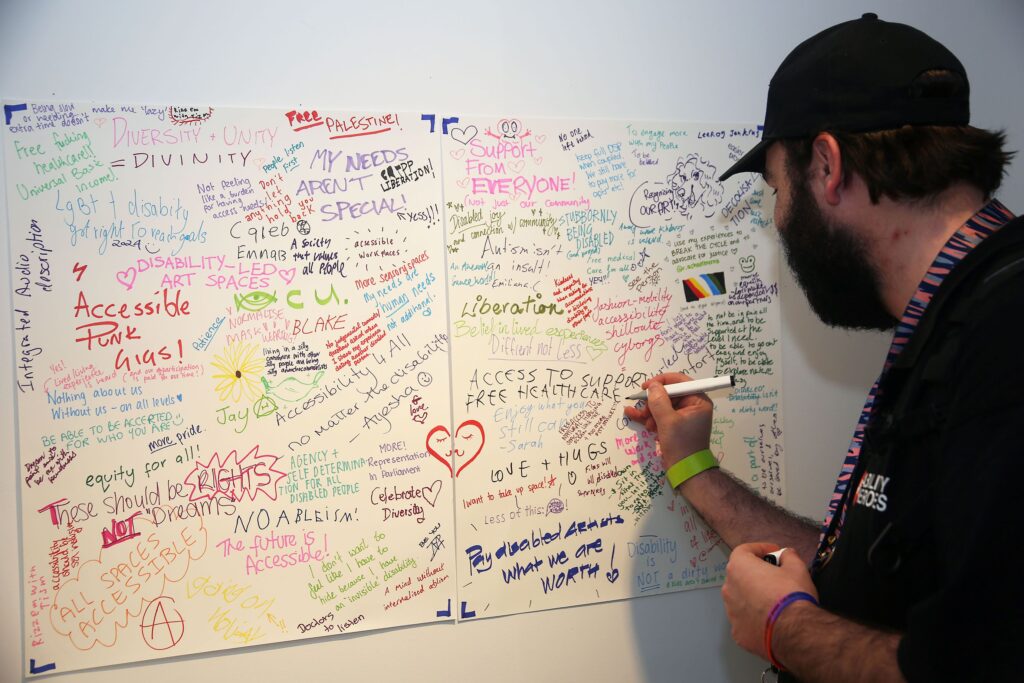
My advocacy is as diverse as the experiences and intersections I sit across – the common theme being the importance of creating spaces for authentic living experience leadership. One of the most meaningful impacts of my advocacy has been creating spaces where young people can use their living experience as a source of knowledge, leadership, and purpose. Too often, young people, especially disabled young people, are spoken for rather than listened to. I’ve worked to shift that by creating platforms and spaces where young people’s insights shape conversations, decisions, and narratives about social change.
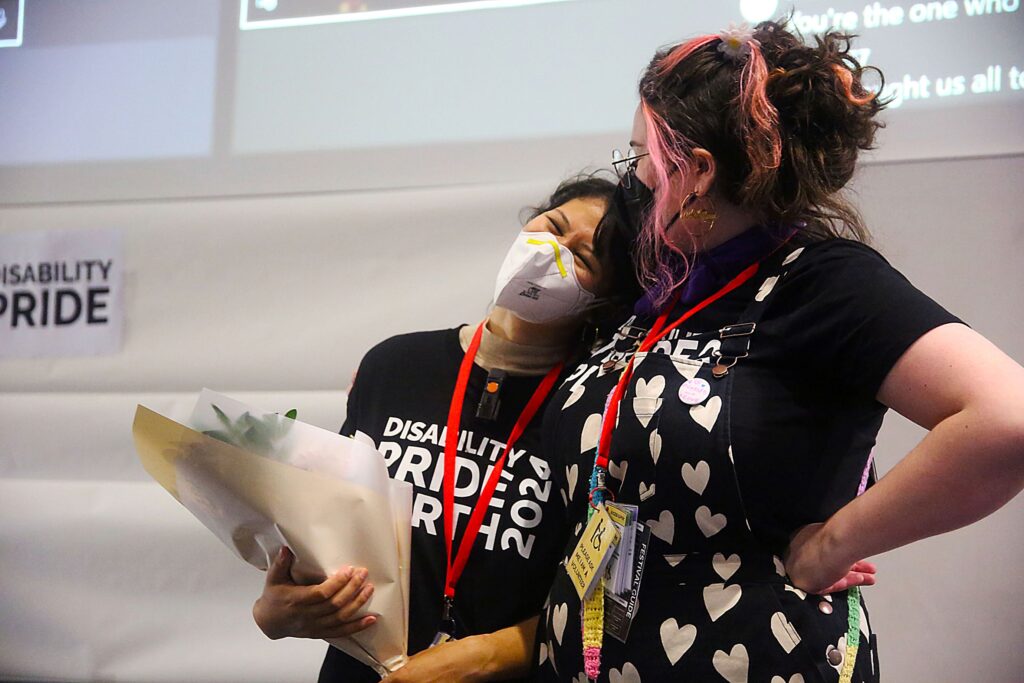
A standout moment along my journey has been founding WA’s first Disability Pride Festival (DPF) in 2024 from award money I won from being named WA Young Person of the Year. Creating a space for and by Disabled people, to come together as community and share our stories, culture, creativity, and expertise, has been one of my proudest achievements – which I most certainly did not achieve alone. A special mention to Sophie Aylmore and Kaygan Lane, two phenomenal disability advocates who were essential in getting DPF off the ground. Having a space for our community to celebrate, mourn, and connect with community, and see themselves reflected with dignity and pride has always been incredibly moving and I look forward to a future of Disability Pride and recognition of Disabled culture.
I’ve also been incredibly proud to see how these spaces ripple outward: organisations becoming more inclusive, young leaders feeling confident to pursue advocacy, and communities beginning to understand disability as a culture and identity. Supporting future generations to not just be included but to shape social change is the impact I’m most proud of – and the work I hope to keep growing.
What impact did the recognition of WA 2025 Young Australian of the Year Finalist have on you?
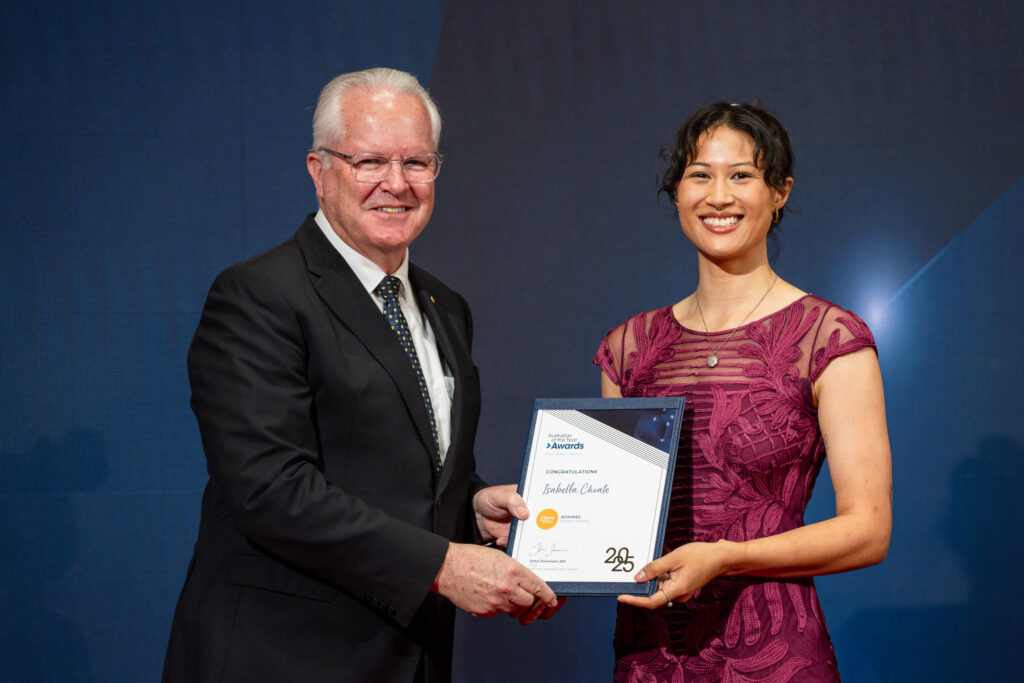
Being recognised as a WA 2025 Young Australian of the Year Finalist was deeply meaningful – not just as a personal milestone, but as a reminder of the responsibility that comes with visibility. Being in the Governor’s Ballroom for the finalist ceremony, I was acutely aware of how many people who traditionally reach awards of this scale do so with the support and privileges such as strong networks, generational wealth, stable funding, or institutional backing. I recognise the privileges that have allowed me to access this space and recognise that my journey has been shaped by adversity as much as opportunity. Being recognised felt like an affirmation that changemaking doesn’t only look one way. It signalled that the Awards’ panel is increasingly open to diverse voices, living experience leadership, and new forms of advocacy.
A true highlight of the experience was meeting Professor Pat Dudgeon, someone I have admired for years for her groundbreaking work in social and emotional wellbeing and Indigenous mental health. Her generosity and wisdom had a marked impact on my time as a psychology student, and connecting with her was a profound honour.
Since the ceremony, I’ve remained in touch with several finalists and recipients working in overlapping fields, including Professor Britta Regli-von Ungern-Sternberg, to ensure the voices of young people with disability are included in the groundbreaking work of her team. These relationships have encouraged collaboration, mutual learning, and a sense of community that extends far beyond the awards night.
Earlier this year, you officially took on the role of CEO at Youth Disability Advocacy Network; what do you hope to achieve in this role?
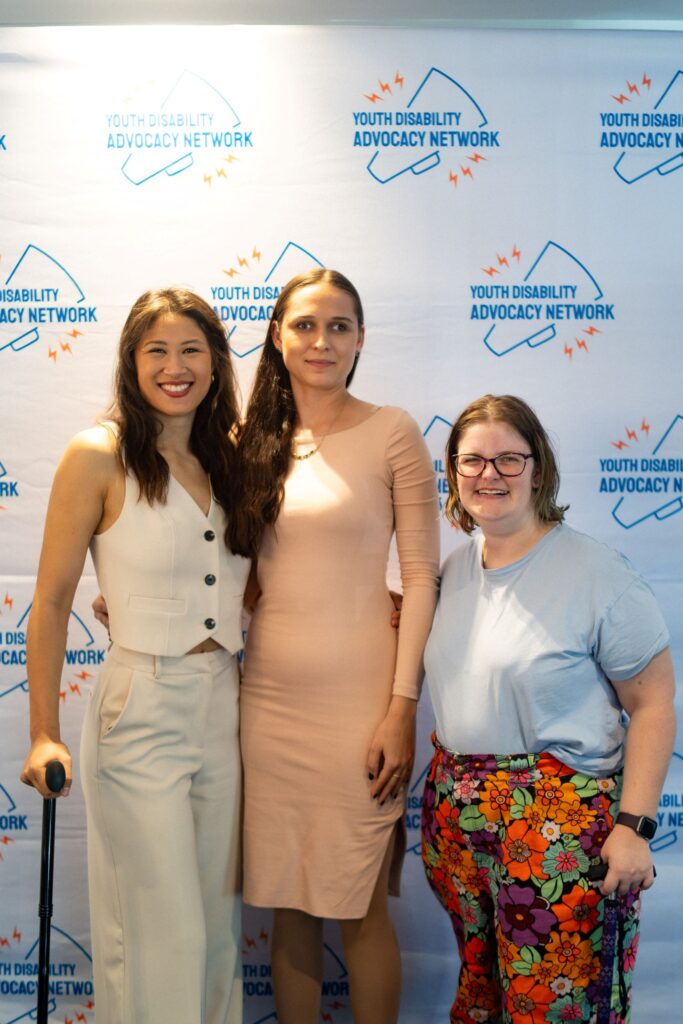
Stepping into the role of CEO at the Youth Disability Advocacy Network in April this year was both an honour and a profound responsibility. In this role, my greatest hope is to help cultivate a strong, confident, and diverse generation of future disabled leaders – young people who feel empowered to influence the systems, cultures and communities around them.
I want decision makers, community groups, organisations and businesses to truly understand the importance of young Disabled voices in shaping the experiences and opportunities they create. Young people with disability are not an afterthought; we are experts in our own lives, and our insights are essential for building environments that work for everyone.
Ultimately, investing in the leadership and perspectives of young people with disability is an investment in the future. It is a commitment to building a society that is more accessible, culturally safe, innovative, and socially equitable. My goal is to ensure that this vision becomes not just a hope, but a lived reality.
3 December 2025 is International Day of People with Disability – what message and meaning do you want this day to have for people in Australia and globally?
On 3 December 2025, International Day of People with Disability invites Australia – and the world – to reflect on what true inclusion means. This year’s theme, ‘Fostering disability inclusive societies for advancing social progress’, reminds us that progress doesn’t begin with policy or infrastructure alone; it begins with valuing Disabled people for our living expertise, cultural contributions, and perspectives, not just viewing us as medical cases or support recipients.
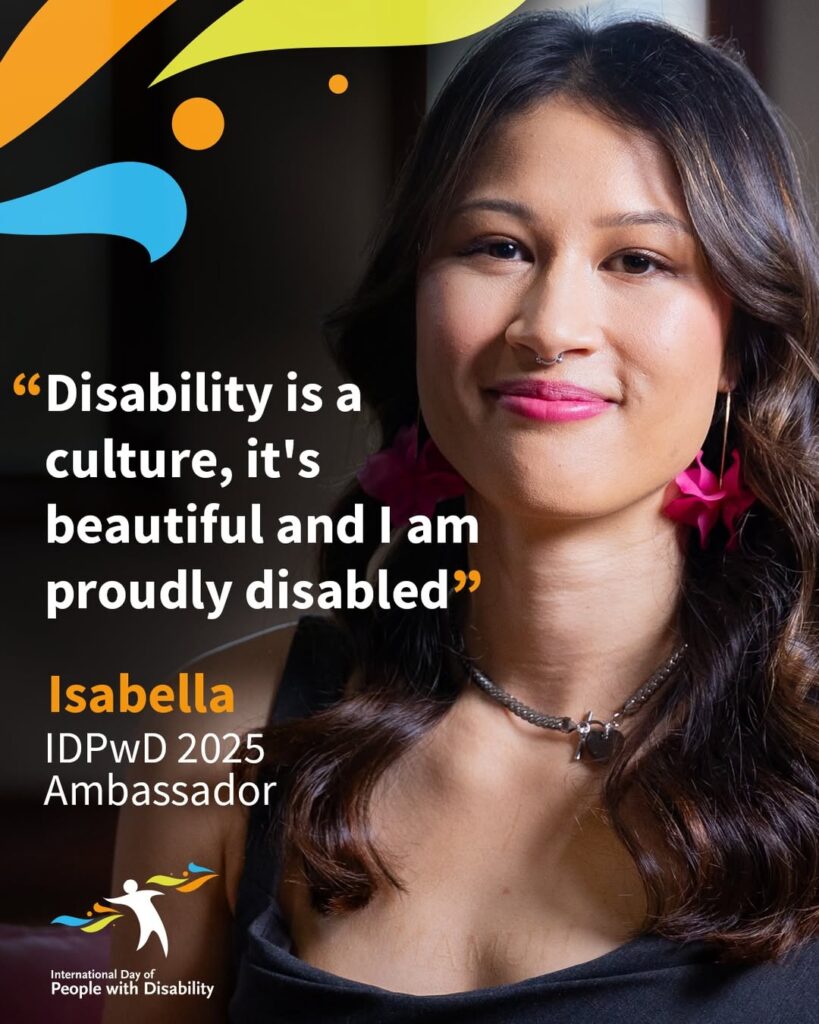
As a 2025 IDPwD Ambassador, I want to use my platform to shift the way disability is understood. Disability is more than a diagnosis, condition, or status. It is a culture – a community with our own histories, languages, shared experiences, and cultural protocols. We are storytellers, innovators, athletes, artists, workers, thinkers, activists, and leaders. Yet too often, disability is still viewed only through a medical or charity lens, which strips away our agency and identity.
For disabled people to be genuinely seen, respected, and valued, the world must recognise disability as a social justice movement – one representing one of the most marginalised groups among all marginalised communities.
My hope is that this day encourages people to widen their understanding: to celebrate Disabled culture, challenge ableism, and commit to building societies where disabled people can thrive, not just survive.
What are your plans for 2026?
I’m going to be real honest and tell you that first and foremost, my plan for 2026 is to survive and sustain myself in a world that isn’t built for me. A realistic part of queer, brown, Disabled leadership is that compassion fatigue and burnout is real, and adding this to managing my unpredictable disabilities is a life-long challenge. For 2026, I want to honour my body – its needs and limits – while still creating a life that feels meaningful and mine. Being a Disabled leader often means making tough choices about where my energy goes; to achieve what I care about, I often must let go of things others may take for granted, like a regular social life or capacity to thrive and not survive.
Practically, I’m hoping to begin my master’s in business administration (if my body allows!), continue providing opportunities for young people through YDAN’s free capacity building programs, and – if the timing and energy allow – bring back Disability Pride Festival, which remains close to my heart. More than anything, I’m approaching 2026 with an open heart and mind – understanding that sometimes my bodymind has other plans than the ones I hope to achieve, and that is okay.
What are your hopes for the future?
My hopes for the future centre on a world where every person is valued simply for being human – not measured by productivity or output, or how well we fit into expectations of us. I hope for a future where we recognise that everyone has access needs, because access is not a “special requirement” but an essential human experience that helps us create environments where people can participate, feel safe and included.
I imagine a society where people can embrace their full, intersectional identities without fear – where differences are not something to downplay or hide, but something to honour. A future where disabled people, people of colour, queer communities, and all those who have been marginalised, can live openly and proudly, knowing the world is designed with them in mind. Above all, I hope for a future rooted in dignity, community, and collective care – a future where belonging is not conditional, but guaranteed.
Photo Credits: Laundry Lane and Tashi Hall